Rawlsian justice
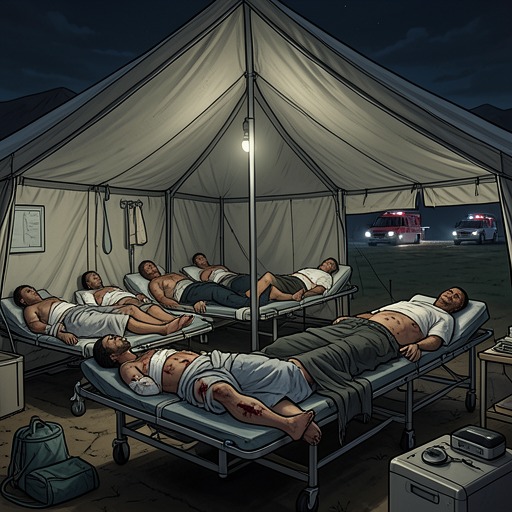
Five Days at MemorialRawlsian justice offers a framework for distributing scarce medical aid by need rather than by the aggregate number of people who might benefit. In the book’s account of disaster triage, it challenges utilitarian calculations that may ask some of the most vulnerable to bear the cost of maximizing a population-wide good, and it makes the criteria used to rank patients a question of justice as well as logistics.
Definition and Contrast
The goal of maximizing net good for a population is associated with utilitarian philosophy, developed by Jeremy Bentham and John Stuart Mill. Applied to disaster medicine, that approach can prioritize the greatest number of lives saved, or invite further calculations about years or quality of life. The book notes that philosophers have warned that such calculations may demand an unacceptable sacrifice from those most in need of assistance.
A different approach, modeled on principles of justice articulated by John Rawls, distributes care according to need. Rawls himself did not apply his principles to medical care; later philosophers adapted them to the problem of lifesaving treatment under scarcity. In this framework, people in the most imminent danger of dying without care have the stronger claim on available aid, even if less urgently ill patients must wait. The book identifies this as the approach taken in most American emergency rooms outside disasters.
Need, Equality, and Scarcity
Need-based priority is not the only alternative to counting lives. Other philosophers have argued that lifesaving resources should be allocated randomly, on the grounds that everyone deserves an equal chance and that no group should be empowered to decide who lives and dies. Their argument challenges the assumption that the number of people saved must be the central measure of a rescue’s value. It also rejects the idea that separate people’s suffering can simply be added together as though many lesser burdens necessarily outweigh one person’s grave suffering.
These approaches answer different dangers in triage. Need-based allocation directs help toward those at greatest immediate risk; random allocation resists discretionary ranking altogether; utilitarian allocation seeks the largest overall benefit. In a disaster, the choice among them matters because resources are limited and every ordering rule can determine who waits, who is moved, and who may be left without timely aid.
The DNR Decision as a Test of Classification
At Memorial Medical Center, doctors made an exception to the usual priority given to the sickest patients and those dependent on machines: all patients with Do Not Resuscitate orders were placed last for evacuation. The order had a narrower meaning than the policy implied. It instructed staff not to revive a patient whose breathing or heartbeat had stopped; it was distinct from a living will requesting that life-sustaining treatment be withheld or withdrawn in specified circumstances. Yet medical chairman Richard Deichmann later explained that he believed DNR patients had a certified terminal or irreversible condition and therefore had the least to lose if disaster struck.
The consequences of treating the label as a broad measure of priority became visible when staff stopped an evacuation transport after seeing a patient’s DNR order. Her daughter had consented to the order on the understanding that resuscitation would not be appropriate if her ninety-three-year-old mother went into cardiac arrest. She did not understand it to mean that her mother should not be rescued. The daughter requested that the order be canceled, and the patient was moved toward the helipad and survived the immediate ordeal. The episode shows how a category intended to guide one clinical decision could be made to govern access to rescue, even though those are different decisions.
Justice in Its Institutional Context
The account also places questions of allocation against a longer history of unequal access to care. Jannie Burgess worked for decades as a nurse in New Orleans hospitals and nursing homes, yet, because of racial discrimination, she could care for patients at private hospitals where she herself could not receive care. Although she was born only months after Memorial opened in 1926, more than four decades passed before she could be a patient there. The hospital was among the last Southern hospitals to integrate and refused to join federal programs that made reimbursement conditional on nondiscrimination. This history does not itself supply a triage rule, but it underscores that the distribution of medical care takes place within institutions whose access has not always been equal.
The contrast with Charity Hospital further locates triage within institutional conditions. Charity had flooded and lost power, plumbing, communications, computers, and elevators; it had no helipad, and it held about twice as many patients as Memorial with a lower staff-to-patient ratio. Its evacuation was not complete until September 2, a day after Memorial’s, yet fewer than ten patients died. Staff described sustaining morale through meetings every four hours and a flashlight-lit talent show, among other efforts. The comparison does not establish a single explanation for the difference in outcomes. It does make clear that decisions about who receives aid unfold alongside staffing, infrastructure, coordination, and the obligations institutions accept toward people in their care.
Significance
Rawlsian justice supplies a language for resisting the reduction of patients to a calculation of total benefit. Its emphasis on need directs attention toward the person whose danger is most immediate, while the book’s examples show why the rules and labels used to identify need must be examined rather than assumed to be neutral. In the disaster setting, a DNR order could be mistaken for a judgment about rescue, just as a patient’s place in a historically segregated system could shape access before an emergency began. The framework therefore illuminates both the moral stakes of scarcity and the institutional decisions through which scarcity is managed.